2026.07.13
Sektör HaberleriMechanized Rice Transplanting Guide
A rice transplanting machine transfers young rice seedlings from prepared seedling mats or trays into a puddled field. The equipment controls row spacing, planting depth, hill spacing, seedling quantity, and operating rhythm more consistently than repetitive manual transplanting.
Searches for rice transplanter machine, manual rice transplanter machine, how to make rice transplanter machine, What are the different types of rice transplanters, Does rice need to be transplanted, and Can rice be planted by machine reflect practical concerns about planting method, equipment structure, nursery preparation, field conditions, and labor requirements.
Planting Method
Rice does not always need to be transplanted. Rice can be established through manual transplanting, mechanical transplanting, dry direct seeding, wet direct seeding, broadcasting, or hill seeding. The appropriate method depends on the rice variety, water availability, soil preparation, weed pressure, labor conditions, planting schedule, and equipment availability.
Transplanting begins with seedlings that have already completed an early growth stage in a nursery. The seedlings are placed into the field at controlled positions. Direct seeding places rice seed directly into the field and eliminates the seedling transfer stage.
Nursery-grown seedlings are removed or picked from a mat, carried by the transplanting mechanism, and inserted into wet soil. Mechanical transplanting can create regular rows that support field observation, fertilizer application, and mechanical management.
Dry, soaked, or pregerminated rice seed is placed in rows, hills, or broadcast patterns. Direct seeding removes the nursery transplanting step, while seed rate, emergence, weeds, moisture, and early field establishment require careful management.
Uniform seedling mats or tray-grown seedlings are placed on the seedling platform. The mat should have suitable density, root binding, thickness, moisture, and strength so that it moves smoothly toward the picking mechanism.
The feeding system moves the seedling mat laterally and forward in small controlled steps. Consistent feeding allows the planting arms or forks to collect similar amounts of seedlings during each cycle.
Planting fingers, forks, or claws separate a small seedling portion from the mat. Picking depth and lateral feeding distance affect how many seedlings are taken for each planting hill.
The planting mechanism moves downward and inserts the selected seedlings into puddled soil. Machine settings, field hardness, travel speed, and float position influence planting depth and seedling uprightness.
The transmission system coordinates machine travel with planting cycles. This relationship determines hill spacing and helps produce regular planting rows across the field.
Equipment Classification
A manual rice transplanter machine uses operator force to move or activate the planting mechanism. It usually has a compact frame, simple transmission, seedling holders, planting claws, ground-contact components, and adjustment points.
Best suited to: Small fields, narrow plots, demonstration areas, or locations with limited power access.
Main advantage: Simple operation and relatively easy transportation.
Main limitation: Field capacity and operator endurance.
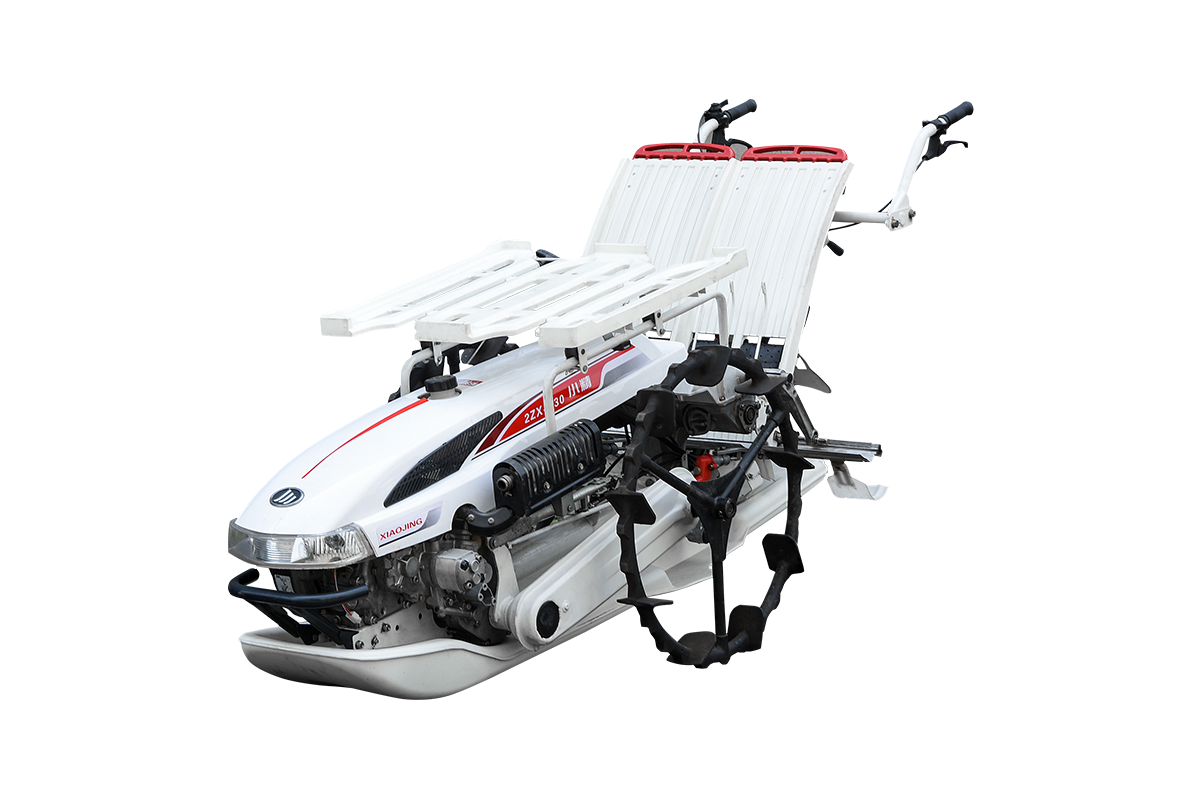
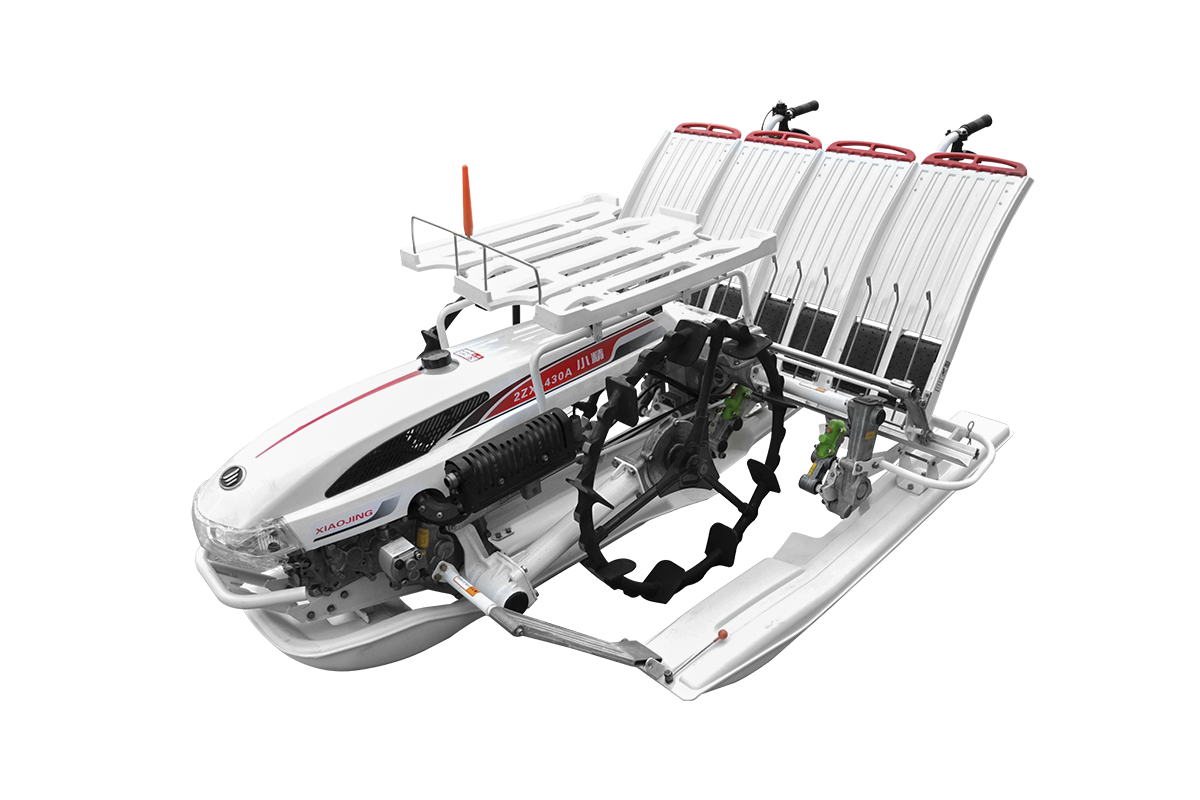
A walking-type machine has an independent engine or powered drive system. The operator walks behind the unit and guides its direction while the machine performs regular planting cycles.
Best suited to: Small and medium fields with adequate turning space.
Main advantage: Higher efficiency than manual transplanting equipment.
Main limitation: Operator must still walk in wet field conditions.
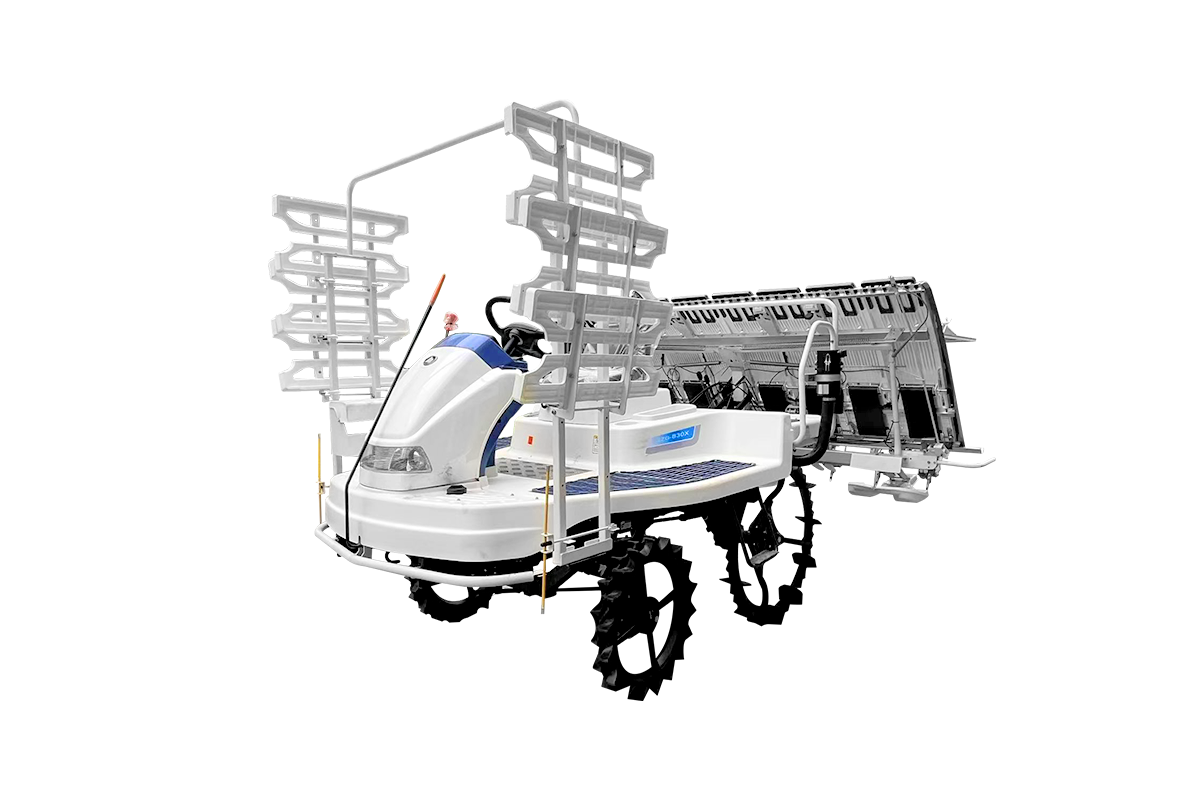
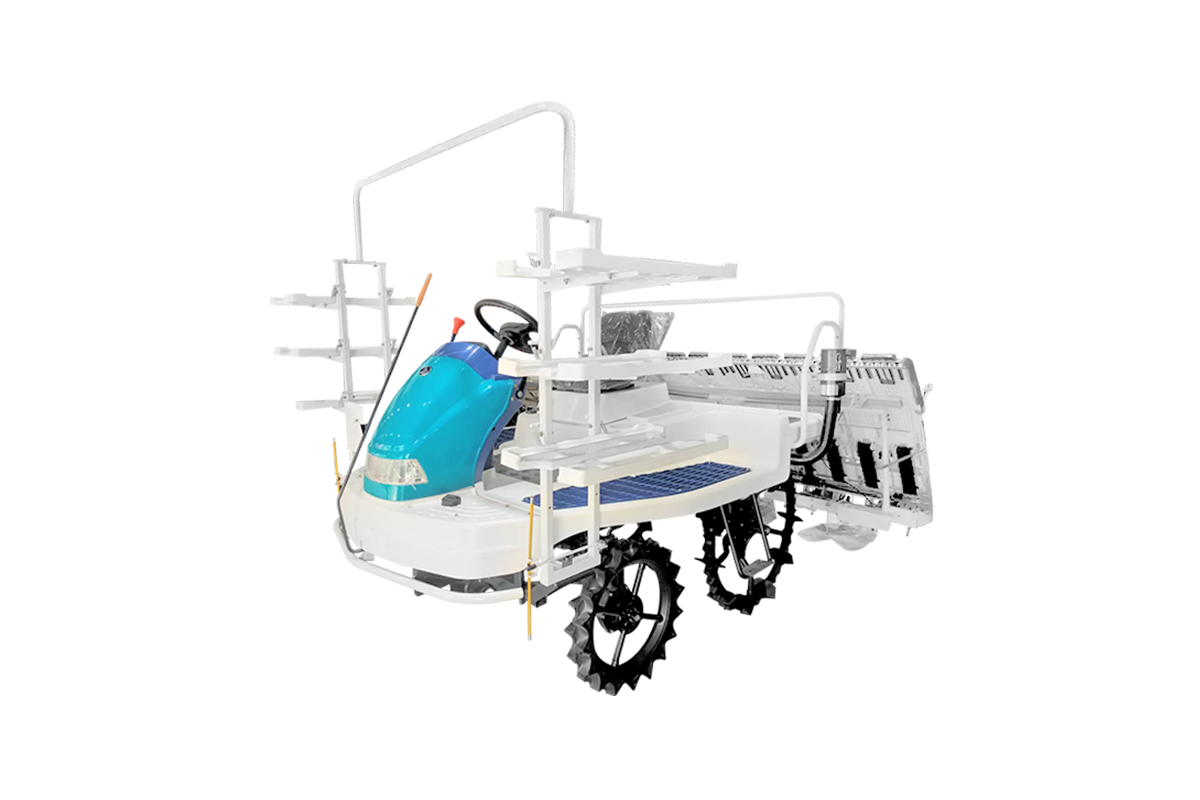
A riding-type transplanter allows the operator to sit on the machine. It normally provides more planting rows, higher travel efficiency, larger seedling capacity, and more adjustment options.
Best suited to: Medium and large regular fields.
Main advantage: High field capacity and reduced walking labor.
Main limitation: Larger turning radius and higher field preparation requirements.
Mechanical forks or claws take seedling portions from a mat and insert them into the field. The structure may use chains, gears, cams, crank mechanisms, or linkages to create the planting path.
Best suited to: Mat-type seedling nurseries.
Main advantage: Repeatable picking and planting motion.
Main limitation: Sensitive to seedling mat consistency.
Advanced equipment can combine guided travel, automatic depth control, seedling feeding, operating monitoring, and planting data management. The actual configuration depends on field requirements and machine design.
Best suited to: Standardized field operations requiring higher consistency.
Main advantage: Reduced operator workload and controlled planting parameters.
Main limitation: More complex operation and maintenance.
| Machine Type | Power Method | Typical Field Scale | Operator Position | Efficiency Level | Main Selection Focus |
|---|---|---|---|---|---|
| Manual rice transplanter machine | Human force | Small or narrow fields | Walking and pushing | Basic | Weight, simplicity, and maneuverability |
| Walking-type transplanter | Engine-driven | Small to medium fields | Walking behind | Medium | Power, row number, flotation, and steering |
| Riding-type transplanter | Engine-driven | Medium to large fields | Seated operation | High | Working width, capacity, and field turning space |
| Automatic transplanting system | Engine and control system | Standardized planting areas | Seated or supervised operation | High | Control accuracy, maintenance, and field compatibility |
Mechanized Planting
Rice can be planted by machine using either direct seeding equipment or a rice transplanting machine. A transplanter handles seedlings. A seeder handles rice seed. The selection depends on whether the crop establishment plan uses a nursery stage.
Seedlings should have relatively consistent height, stem strength, root development, mat thickness, and density. Weak or uneven mats can cause missed hills and irregular picking.
Excessive field unevenness changes machine height and planting depth. Deep mud may increase wheel slip, while hard soil can prevent proper seedling insertion.
Excessive water can make planting positions difficult to observe and may allow seedlings to float. Insufficient moisture may increase planting resistance.
Seedling pickup quantity, planting depth, hill spacing, row alignment, float angle, and travel speed should be checked before continuous operation.
The phrase how to make rice transplanter machine usually refers to understanding its mechanical design. A functional transplanter requires more than a frame and several planting claws. The seedling feeding speed, machine travel speed, planting path, drive ratio, field flotation, and adjustment range must operate as one coordinated system.
Supports the engine, seedling platform, transmission, planting units, floats, wheels, and operating controls. The frame requires sufficient stiffness without creating unnecessary weight.
Maintains machine position over soft soil and helps the planting mechanism follow field height.
Provides forward movement and synchronizes planting frequency with machine travel.
Holds one or more seedling mats and supports smooth lateral and forward feeding.
Advances the mat by a controlled amount after each picking movement.
Separates seedling portions and follows a defined path toward the soil.
Changes the relationship between the planting mechanism and field surface.
Adjusts planting frequency relative to machine travel distance.
Regulates the pickup width or feeding amount to influence seedlings per hill.
More rows can increase working width and field capacity. Machine power, weight, transport width, turning radius, and field shape must also be considered.
Row spacing should match crop management requirements, variety characteristics, and local planting practices.
Hill spacing affects plant population. It may be adjusted through transmission ratios, planting frequency settings, or electronic controls.
The result depends on seedling density, pickup width, feeding distance, planting fork geometry, and seedling mat condition.
Planting too shallow can result in floating or unstable seedlings. Planting too deep can bury stems, delay recovery, and create uneven establishment.
Higher speed can improve field capacity but may increase missed planting, tilted seedlings, depth variation, and operator control difficulty.
Larger machines require wider headlands. Narrow or irregular fields may be better served by compact walking-type equipment.
Machine weight distribution, wheels, floats, and mud depth influence sinking, slipping, and planting consistency.
Field Diagnosis
Seedlings and soil left on the platform can dry, harden, and block the feeding mechanism.
Clean planting arms, floats, wheels, drive components, and lower-frame areas after field work.
Bent, worn, or loose planting parts can produce missed hills and inconsistent seedling quantities.
Confirm tension, lubrication, alignment, wear, and secure fastening before the next operation.
Remove standing water and allow cleaned parts to dry before storage or lubrication.
No. Rice can be transplanted or directly seeded. Transplanting is selected when nursery-grown seedlings and controlled field placement are preferred. Direct seeding is selected when rice seed will be established directly in the field.
Yes. A direct seeding machine can plant rice seed without a transplanting nursery. A rice transplanter machine requires prepared seedlings rather than loose seed.
Suitable seedlings should form a stable, uniform mat with sufficient root binding, manageable height, consistent density, and suitable moisture. The required dimensions depend on the seedling platform and feeding mechanism.
Empty positions may result from weak seedling mats, insufficient seedling feeding, damaged planting forks, incorrect pickup settings, excessive travel speed, or blocked components.
A manual machine can work in small areas and narrow plots. Larger planting areas usually require powered walking-type or riding-type equipment to improve field capacity and reduce operator fatigue.
Depth should be checked before operation and whenever field hardness, mud depth, water level, travel speed, machine load, or float position changes.
Machine Configuration Reference
Field size, plot shape, turning space, field entrance width, and transport requirements
Tray dimensions, seedling mat width, thickness, age, height, moisture, and nursery density
Required rows, row spacing, hill spacing, seedlings per hill, and planting depth
Soil type, mud depth, water level, leveling quality, field hardness, and slope
Manual, walking-type, riding-type, required field capacity, and available maintenance support